An engineering director lost her best engineer last year.

$280,000 to replace him.

Multiply that by everyone who quit last year.

She had no idea he was looking.

He'd asked about a promotion path four months earlier. His skip-level said "we'll figure it out." Then nothing.

He didn't push back. He just started taking recruiter calls.

She found out the day he resigned.

This happens 60 times a year in a 300-person company. That's $5.4 million walking out the door. Not because managers don't care. Because they can't see what's happening until it's too late.

$5.4M What a 300-person company loses annually
22% Average reduction in 90 days
90 Days From setup to first save
12:1 Typical first-year ROI

The Resignation Was Never the Beginning

It was the end. The signals started 60-90 days earlier. Nobody saw them.

A healthcare company lost 14 people last quarter.

Exit interviews all said variations of the same thing: "I tried to raise it. Nothing changed."

The problems weren't hidden. They were invisible to the people who could fix them.

A VP told me last month that her best performer resigned without warning.

I asked when the warning signs started.

She said there weren't any.

I asked when he last raised a concern in a 1-on-1.

She couldn't remember. The 1-on-1s had been getting shorter. She thought that meant things were going well.

It meant he'd stopped trying.

Most managers aren't bad at their jobs.

They're flying blind.

Annual surveys tell you what people felt six months ago. Pulse surveys get ignored. 1-on-1s get canceled. Exit interviews tell you why someone left after they're already gone.

By the time a problem is visible, the decision is already made.

The Question Nobody Asks

What if managers could see the shift from "I'm good" to "I'm fine" to "I'm looking" before it turned into a resignation letter?

Not surveillance or tracking individuals. Just visibility into patterns that are already there.

That's what changes a $5.4M problem into a $1.2M savings.

What the Companies Who Keep Their People Do Differently

It's not ping pong tables or unlimited PTO. It's knowing what's wrong before someone quits.

One Question Per Day

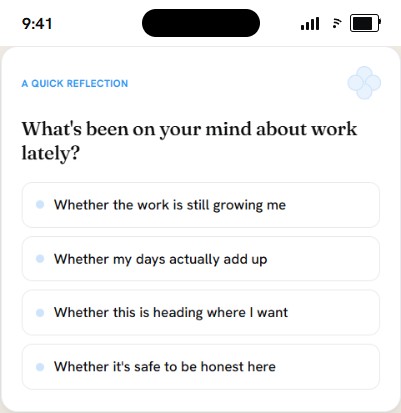
Every morning, your team answers one question about how they're doing.

Takes less than 30 seconds. Completely anonymous. No surveys, no meetings, no manager breathing down their neck.

The anonymity is what makes it work. People answer honestly because there's no consequence.

Patterns Surface Before Problems Explode

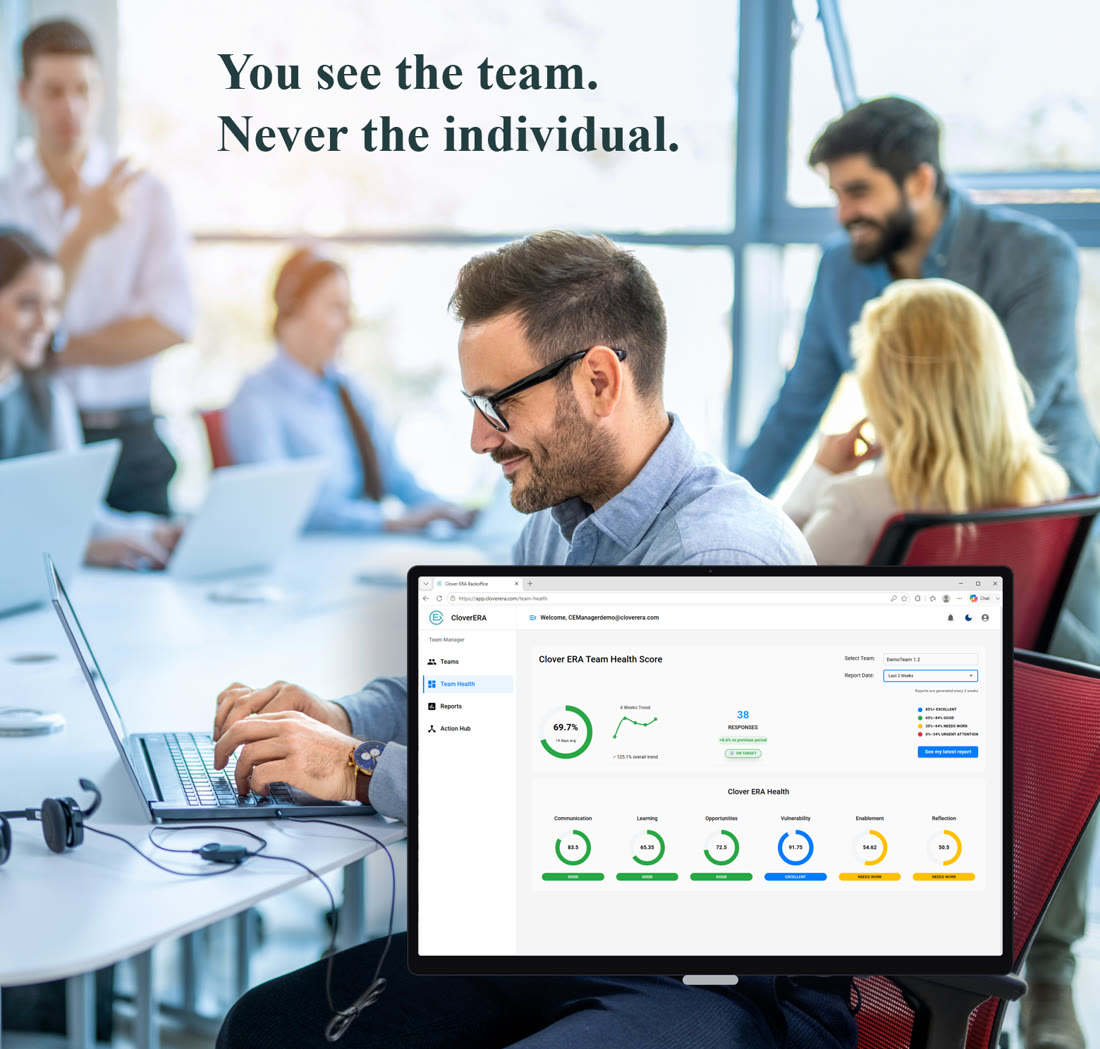
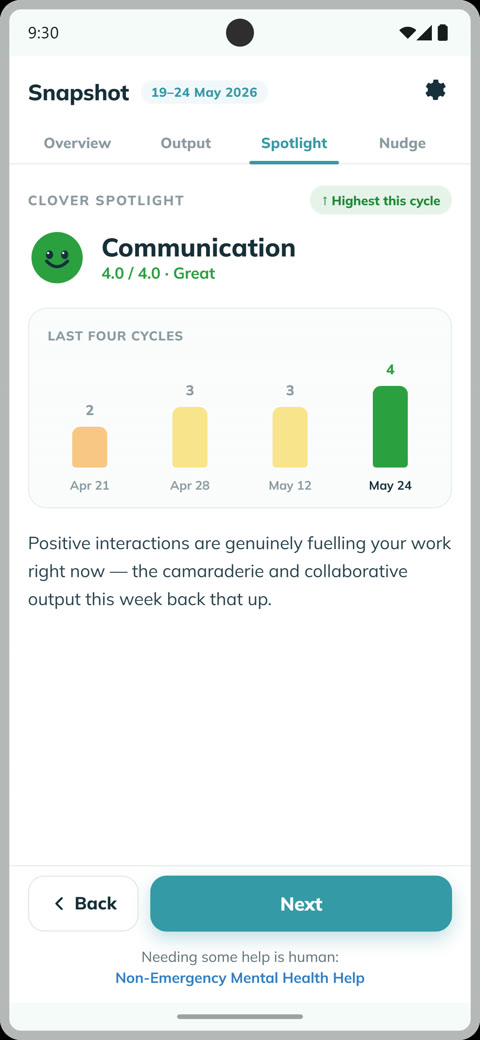
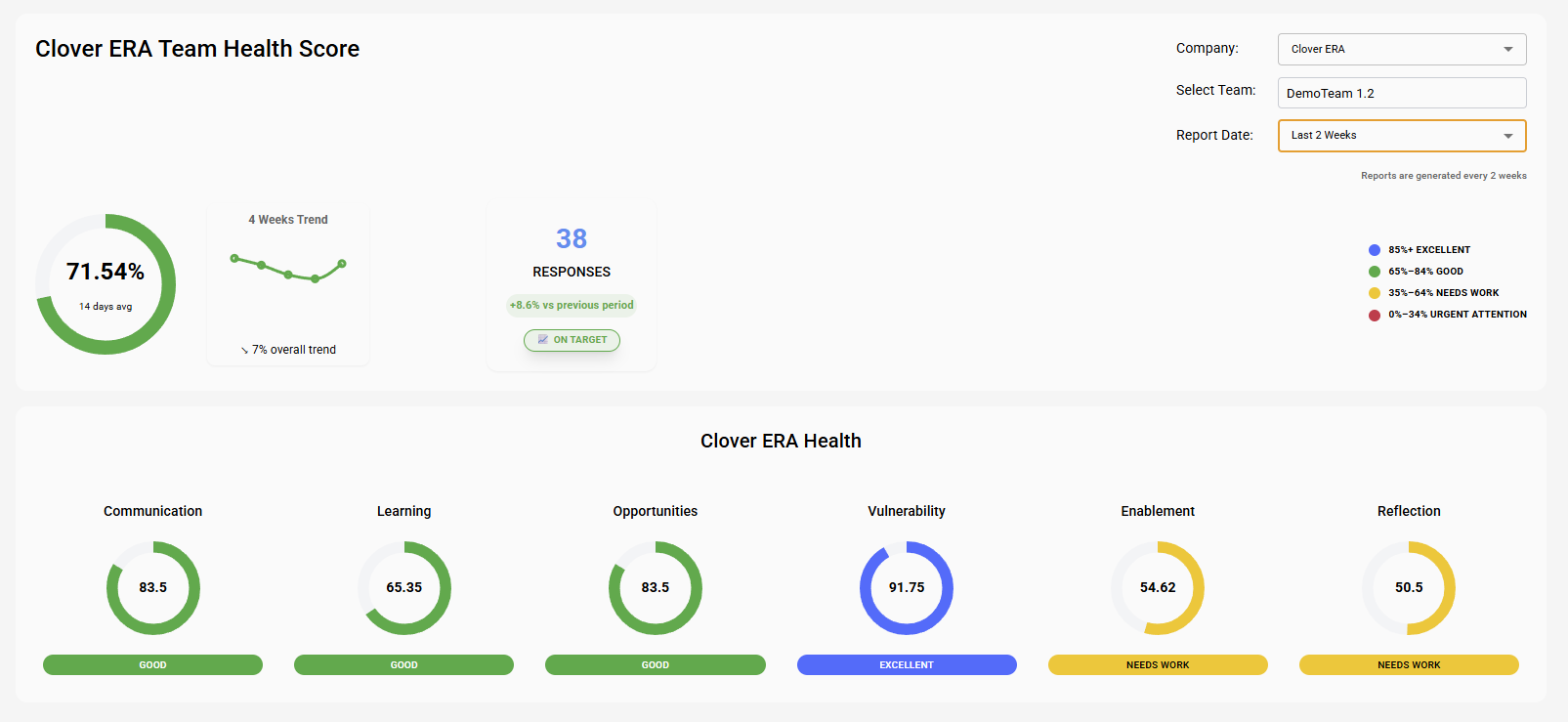
Managers see real-time dashboards. Not individual responses. Team patterns.

When "good" becomes "okay" across half the team, that's a signal. When workload scores drop after a reorg, that's a signal.

The system doesn't tell managers who's struggling. It tells them something IS struggling and what to do about it.

Small Actions Today Prevent Resignations Next Quarter

A 5-minute conversation this week is worth more than a counter-offer next month.

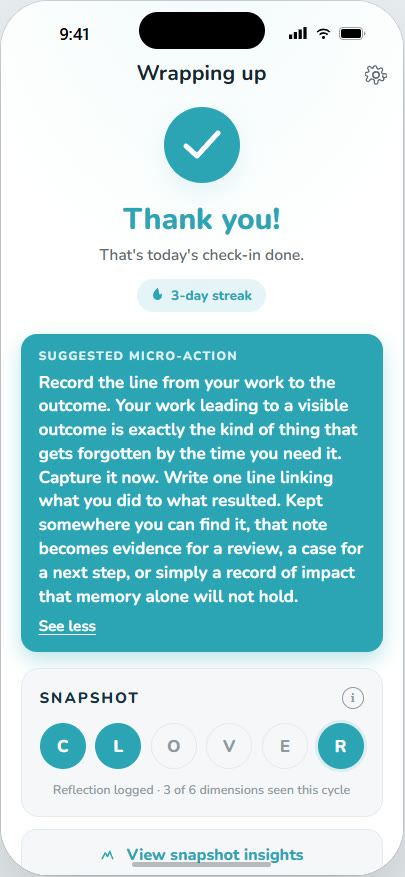
The system tells managers exactly what actions to take based on what the patterns reveal. Adjust workloads. Create space for feedback. Address the tension that's building before it becomes a two-week notice.

Most of the fixes take less time than the exit interview would.

"The anonymity is what makes this work. My team answers honestly because there's no fear. I get the insights I need without creating a surveillance culture."

Director of Engineering, 180-person tech company

Why Surveys Fail and This Doesn't

Annual surveys ask "how did you feel last quarter?" People give safe answers because they don't trust that it's really anonymous.

This asks "how are you feeling today?" with complete anonymity, daily. There's no identifying who said what because the system doesn't track it.

The patterns reveal problems while there's still time to fix them. That's the difference between an exit interview and a save.

How many problems are building on your team right now that you won't hear about until someone resigns?

What It Looks Like When It Works

These aren't testimonials. They're what happened when managers could finally see what was coming.

The Engineering Team That Stopped the Bleeding

A 450-person tech company was losing 8-10 engineers per quarter. Each one cost $180K to replace between recruiting fees, onboarding, and the six months it took to get someone productive.

They'd tried annual surveys. Results arrived eight weeks later. By then, three more people had quit.

What Changed:

Within the first 60 days, the system flagged a pattern: workload scores were dropping in two specific teams. Both had shipped major releases in the prior month. Managers adjusted timelines, created breathing room, and had conversations they wouldn't have known to have.

30% Turnover reduction
$1.4M Annual savings
67 Days To first result
14.6x Year one ROI

"We went from losing 2-3 engineers a month to losing maybe one per quarter. The system caught burnout patterns before they turned into resignation letters."

VP of Engineering

14 Resignations That Didn't Happen

A 280-person healthcare provider had 18% annual turnover. Everyone knew burnout was a problem. Nobody knew where it was worst until someone quit.

Exit interviews kept saying the same thing: "I was drowning and nobody noticed."

What Changed:

Six weeks in, the system surfaced a pattern: one department's stress signals were twice as high as the rest of the company. The department head had no idea.

Turns out they'd been absorbing work from a team that had been downsized. Nobody had adjusted expectations. One conversation with leadership. Workloads redistributed. Problem solved before anyone resigned.

20% Turnover reduction
$890K First-year savings
14 Resignations prevented
9.3x Year one ROI

"We saved 14 people who would have quit. Not with counter-offers. With conversations that happened early enough to actually fix the problem."

Director of Operations

What Is This Actually Costing You?

Most companies underestimate turnover cost by 40%. Plug in your numbers.

Your Annual Turnover Cost:

$6,750,000

(Based on industry-standard 150% replacement cost per employee)

If you reduced turnover by 22%:

$1,485,000

That's not a projection. That's the average result in the first 90 days.

The Difference Between Knowing and Guessing

Annual Engagement Surveys

Measure engagement once per year.

Results arrive 6-8 weeks after the survey closes. By then, the problems have either resolved themselves or turned into resignations.

Data goes to HR. HR puts it in a deck. Deck gets presented. Nothing changes at the manager level where it matters.

Employees don't trust it's anonymous. They give safe answers. The real problems stay hidden.

Cost: $50K-$100K per year for data you can't act on fast enough.

What Actually Works

Clover ERA

30 seconds per day. Anonymous. No survey fatigue.

Managers see patterns in real-time. Not reports that arrive next quarter.

The system tells managers what to do, not just what's wrong. Specific actions based on what the patterns reveal.

Complete anonymity means honest answers. You can't identify individuals, but you CAN fix what's affecting them.

Cost: $96K per year for a system that pays for itself in the first 90 days.

How Many of Your Managers Found Out Someone Was Leaving the Day They Resigned?

That's not a rhetorical question.

If the answer is "more than zero," there's a visibility problem. Not a management problem or a culture problem. A visibility problem.

Schedule a 15-minute Turnover Analysis. No pitch. No pressure. We'll look at your actual turnover data and tell you where the gaps are.

If Clover ERA makes sense for your situation, we'll tell you. If it doesn't, we'll tell you that too.

What You'll Get:

We'll show you where you're losing people, what it's costing you in actual dollars, whether early intervention would have changed the outcome, and what a 22% reduction would mean for your specific numbers.

Schedule Your Free Turnover Analysis Calculate Your Cost First

Questions? Call (212) 918-4448 or email contact@cloverera.com