"I Did Tell Her. Four Months Before I Resigned."
His manager heard a question about promotions. He was saying goodbye.
He'd asked about a promotion path. She said "we'll figure it out." Then nothing happened.
He didn't complain. He didn't push back. He just started taking recruiter calls.
She found out the day he resigned. At 150% of his salary, over $150,000 to replace him. Nine months to backfill. The person they hired still hasn't shipped what he built in his first quarter.
The signals were there the whole time. They just never made it to her.
It's the end. The decision started 60-90 days earlier. Nobody saw it.
A VP told me her best performer resigned without warning last month.
I asked when the warning signs started.
"There weren't any."
I asked when he last raised a concern in a 1-on-1.
She couldn't remember. The 1-on-1s had been getting shorter. She thought that meant things were going well.
It meant he'd stopped trying.
By the time someone says "I'm leaving," the decision was made weeks ago. The job search started a month before that. The frustration started a month before that.
Exit interviews always reveal problems that existed for four to six months. The information was there. It just never made it to the people who could fix it.
Annual surveys don't catch this. They measure how people felt six months ago. By the time Q4 results arrive, the Q2 problems have already turned into resignations.
1-on-1s don't catch it either. They get canceled half the time. When they do happen, employees don't share real concerns. Too risky. Too little evidence that anything will change.
The tools designed to surface problems are the same tools that bury them.
What if managers knew someone was struggling before they started job hunting?
Not surveillance. Not tracking who said what. Just visibility into patterns that are already there, surfaced early enough to do something about them.
That's the difference between an exit interview and a save.
The system is simple. The results aren't.
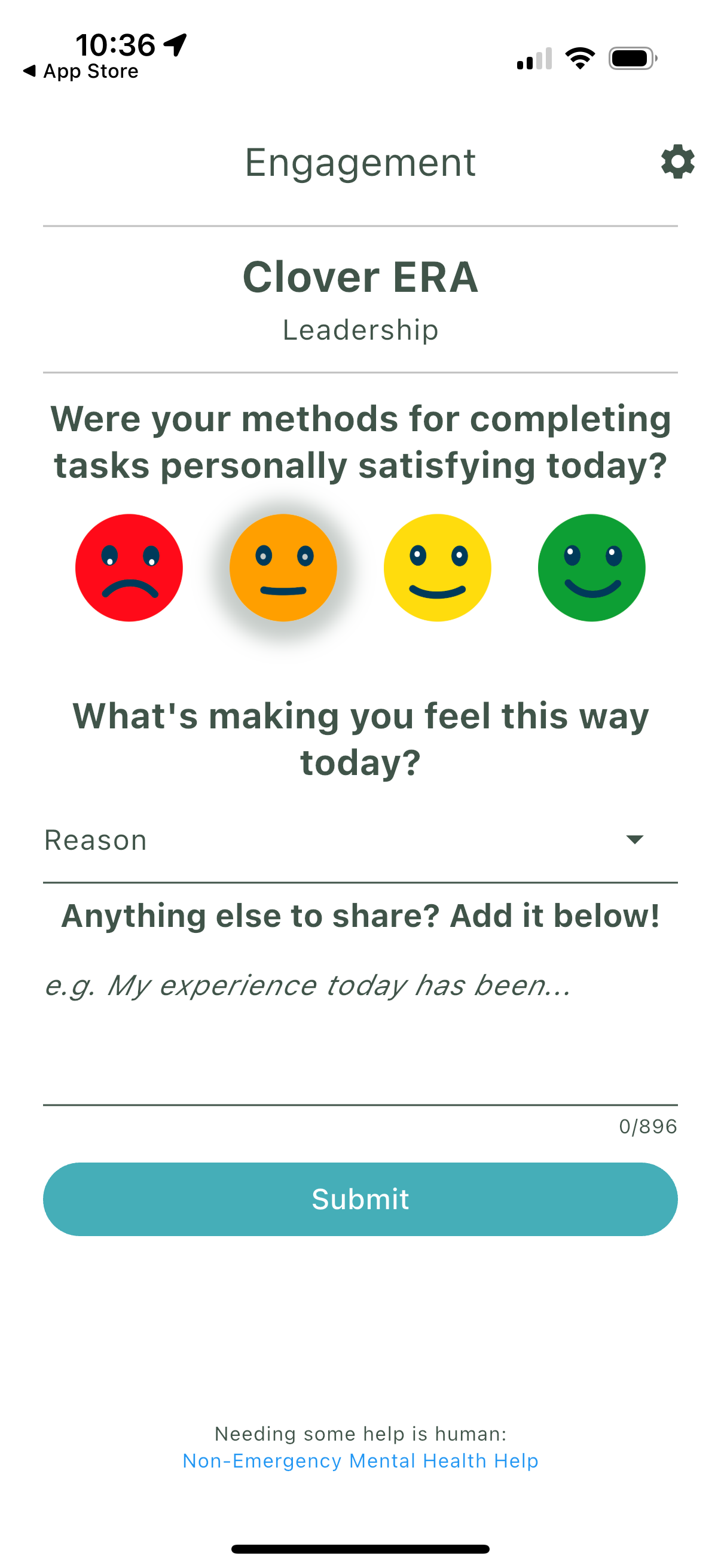
Every morning, employees answer one question about how they're doing. Takes less than 30 seconds. Anonymous. No names attached. No way to trace who said what.
That's the point. People answer honestly when there's no consequence. The problems they'd never bring up in a 1-on-1 surface immediately when there's no risk attached.
Within a week, you know which teams are struggling. Within a month, you know exactly what's wrong.
Managers get weekly reports showing team patterns. Not individual responses. Patterns.
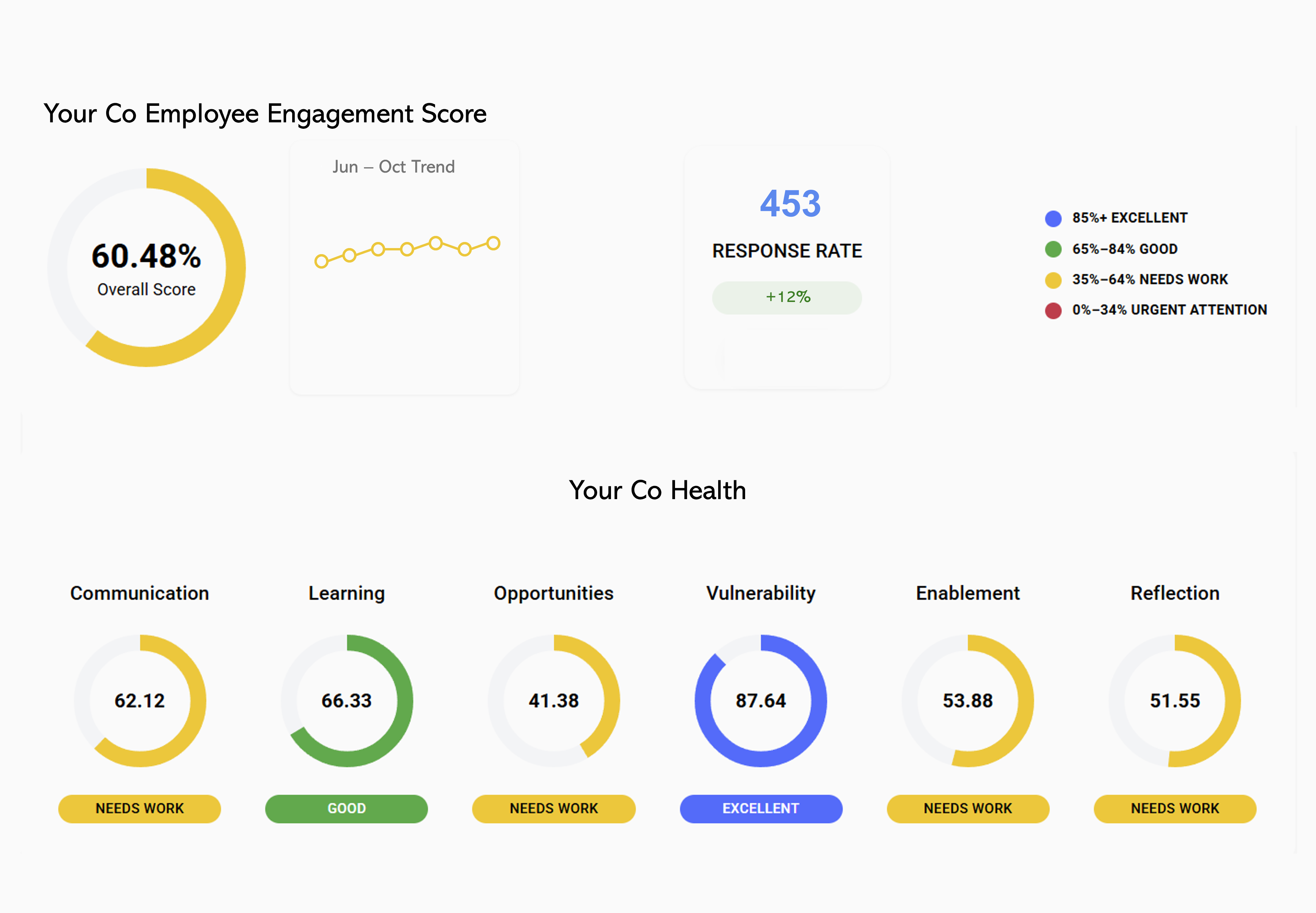
When half the team reports workload stress, that's a signal. When communication scores drop after a reorg, that's a signal. When the "opportunity" dimension flatlines for six weeks, that's a signal.
The system tells managers what's breaking. It doesn't tell them who's complaining. Problems get fixed without witch hunts. Without anyone feeling exposed. Without the trust damage that comes from surveillance.
When you know something's wrong, you can fix it.
Redistribute workload before burnout hits. Create space for a conversation before resentment builds. Address the tension before it becomes a resignation letter.
Most of the fixes are small. A project reassigned. A meeting canceled. A career conversation that was overdue.
Small fixes made early prevent expensive departures later.
SHRM research shows replacement costs run 150-200% of salary. One prevented departure can save $75,000-$300,000 depending on role.
Want to see the platform in detail? Explore the Clover ERA Platform.
How many problems are building on your team right now that you won't hear about until someone resigns?
Research shows these signals appear 60-90 days before resignation. Most managers never see them.
When teams are drowning, the people drowning rarely say so directly. They think everyone else is handling it. Or they don't want to seem incapable. Or they've complained before and nothing changed.
Daily anonymous signals surface workload patterns within a week. Managers see the trend before burnout becomes resignation. The fix is usually small: redistribute a project, cancel a non-critical meeting, have a conversation that was overdue.
Restructures create confusion. Who owns what? Who reports to whom? Where do decisions get made? Nobody asks in standups because they assume everyone else figured it out.
When communication scores drop across a team, that's a signal. The pattern is visible long before anyone mentions it in a meeting. Managers who see it early can clarify ownership and address confusion directly.
People don't leave jobs. They leave dead ends. When someone stops seeing a path forward, they start looking elsewhere. They don't announce it. They don't complain. They just disengage.
When "opportunity" scores flatline for weeks, that's the warning. A career conversation, a new project, or a clear development path can change the trajectory before the resignation letter.
What patterns are forming on your team right now that nobody's talking about?
When any of these break down, people start job hunting. We track all six, daily.
When people feel unheard, they stop trying to be heard. Then they leave. We track communication quality daily. When it drops, managers know before the silence becomes permanent.
Nobody leaves a job where they're learning.
They leave when they stop. We identify when development has flatlined, while there's still time to change the trajectory.
People don't leave jobs. They leave dead ends. We surface when employees see no path forward, giving managers the chance to open doors before they walk out of them.
When people don't feel safe, they don't speak up.
They just leave. We measure trust levels daily. When they erode, we catch it before the team fractures.
People can handle hard work. They can't handle working without the tools to succeed. We identify when teams lack what they need, before frustration becomes resignation.
No time to think means no time to recover.
We detect burnout signals weeks before traditional surveys would catch them. Usually before the employee even recognizes it themselves.
Most companies have no idea. Plug in your numbers.
If you prevented 6 departures, you'd save: $675,000
Based on SHRM methodology: 150% of salary per departure.
Want to see exactly where you're losing people?
Schedule Your Free Turnover AnalysisThat's not a rhetorical question.
If it's happened more than once, there's a visibility gap. The problems exist. The signals exist. They're just not making it to the people who can fix them.
Schedule a 15-minute Turnover Analysis. We'll show you where you're losing people, what it's costing you, and whether early intervention would have changed the outcome.
No pitch. No pressure. Just data about your specific situation.
Questions? Call (212) 918-4448 or email contact@cloverera.com